
CHAKWISE Wisdom-Driven Investment Advisory
← Back to Home
Research & Market Intelligence

Market Intelligence & Macro

Global capital does not move by accident. In the United Arab Emirates, real estate values are anchored to sovereign liquidity, structural migration from mature Western jurisdictions, and long-term economic stewardship. This briefing hub strips away speculative broker sentiment to deliver objective macroeconomic analysis, institutional market indicators, and real supply-demand dynamics across Dubai and the Northern Emirates. For family offices and private investors assessing regional exposure, these notes provide clarity on currency stability, inter-emirate yield spreads, and cycle positioning.

Solaya 8 by Meraas: Strategic Investment Analysis
Market Intelligence & Macro

Solaya 8 by Meraas: Strategic Investment Analysis

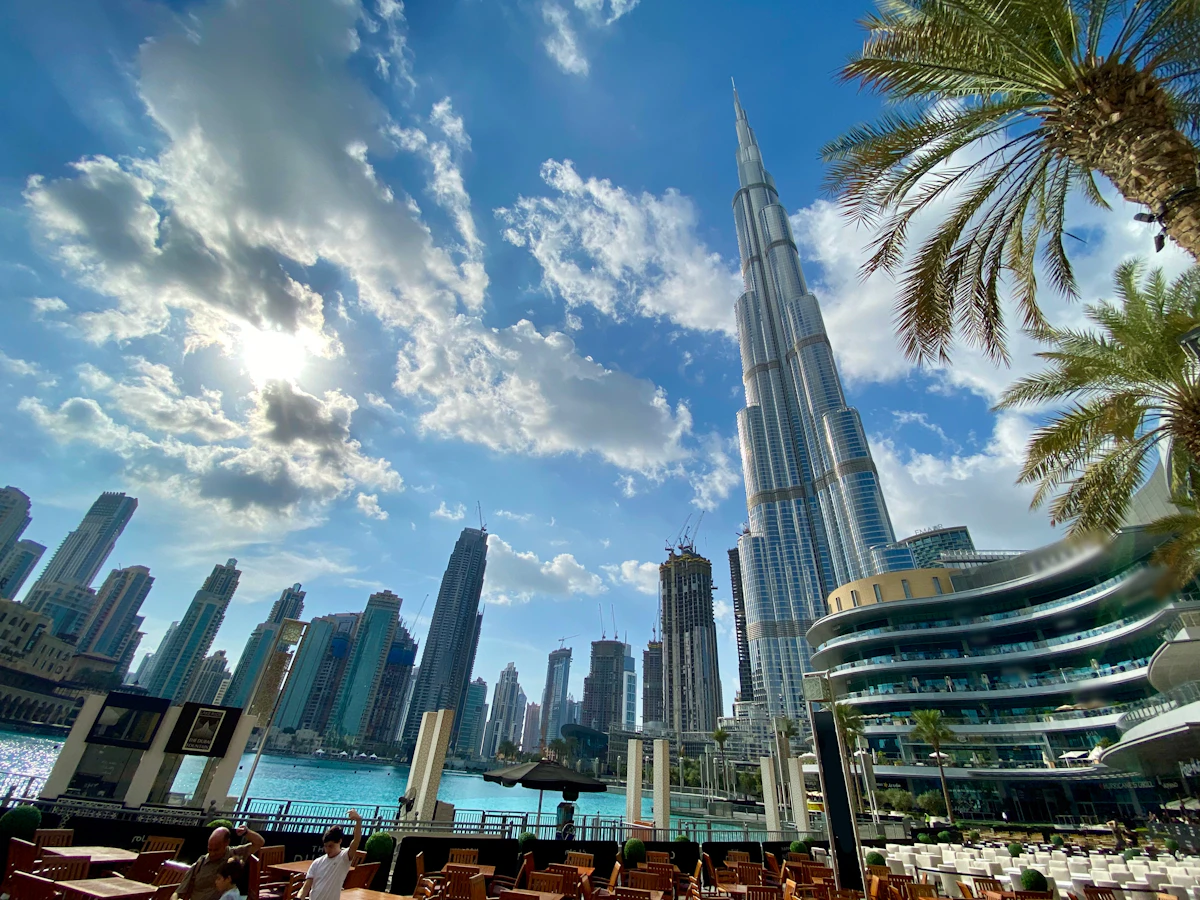
The Dubai luxury residential sector continues to attract significant domestic and international capital, driven by sustained population growth and high net worth migration. However, prevailing market dynamics necessitate a departure from speculative acquisition models toward disciplined, yield-focused underwriting. Meraas has consistently delivered master-planned lifestyle destinations that shape the urban fabric of Dubai, yet institutional investors must evaluate new product launches through a rigorous lens of capital preservation, long term rental absorption, and realistic appreciation trajectories. [image: /dubai.jpeg | center | Aerial perspective of Dubai luxury residential districts and urban infrastructure.] Solaya 8 enters a crowded high-end segment where supply pipelines are expanding across prime and secondary micro-locations. While Meraas brings robust execution pedigree and strong brand equity to this asset, the overarching strategy requires separating developer marketing narratives from fundamental asset performance. Investors must assess whether current entry valuations adequately price in construction timelines, future community supply density, and prevailing interest rate environments before committing capital to off-plan allocations.

Palm Springs Real Estate Strategy Assessment
Market Intelligence & Macro

Palm Springs Real Estate Strategy Assessment

The Palm Springs residential market presents a unique dichotomy between lifestyle demand and fundamental capital efficiency. Investors frequently succumb to the allure of resort style aesthetics, ignoring the underlying macroeconomic headwinds that dictate long term asset performance. At CHAKWISE, founded by Chakravarthy Natarajan Santhakumar, our institutional mandate requires stripping away speculative noise to evaluate properties purely on risk adjusted returns and yield durability. [image: /dubai.jpeg | center | Aerial view of Palm Springs residential layout and surrounding infrastructure.] Recent transaction volumes indicate a stabilization in pricing, yet rental growth is beginning to decouple from historical inflationary spikes. This divergence signals a mature cycle where indiscriminate buying will inevitably result in compressed yields and extended holding periods. Consequently, deployment of capital into this micro market demands rigorous underwriting rather than emotional attachment to scenic locations.

NBCC Enters Dubai: Institutional Real Estate Reality
Market Intelligence & Macro

NBCC Enters Dubai: Institutional Real Estate Reality

The entry of NBCC, an Indian government backed entity, into the Dubai real estate market has triggered a fresh wave of retail speculation. Market commentators often frame sovereign backing as a guarantee of outsized returns. However, institutional strategy at CHAKWISE dictates a forensic, anti-FOMO evaluation of cross-border public sector undertakings. State backing mitigates counterparty risk during construction, but it does not insulate an asset from macroeconomic compression or oversupply cycles in specific micro-markets. [image: /dubai.jpeg | center | Aerial view of Dubai master developments under macroeconomic review.] Investors must separate the institutional credibility of the developer from the operational fundamentals of the asset class. Sovereign entities bring execution capability and regulatory adherence, yet they remain subject to local demand elasticity, absorption rates, and rental yield compression. A strategic approach requires looking beyond the prestige of a government-backed nameplate and focusing strictly on net operating income projections, realistic exit multiples, and total cost of ownership over a seven to ten year holding period.

Sharjah Real Estate - Beyond Dubai's Shadow
Market Intelligence & Macro

Sharjah Real Estate - Beyond Dubai's Shadow

For families evaluating the broader UAE landscape, attention often gravitates instinctively toward the high velocity districts of Dubai. Yet quiet wealth often moves differently. Sharjah offers an alternative anchored in traditional family ownership, measured growth, and distinct regulatory frameworks. According to data from Sharjah Real Estate Registration Department, transaction patterns here reflect end user stability rather than speculative churn. [image: https://images.unsplash.com/photo-1546412414-e1885259563a?auto=format&fit=crop&w=1200&q=80 | center | Market Context Caption] This structural difference creates unique conditions for capital preservation.

Ras Al Khaimah: Structural Shift or Speculation?
Market Intelligence & Macro

Ras Al Khaimah: Structural Shift or Speculation?

Written by Chak (Chakravarthy Natarajan Santhakumar), Senior Investment Advisor. Every emerging market produces moments where momentum outpaces infrastructure. Over the past twenty-four months, Ras Al Khaimah has transitioned from a quiet northern outpost defined by manufacturing and local staycations into one of the most discussed hospitality corridors in the Gulf. The catalyst is obvious: the arrival of integrated resort gaming and an aggressive master-planned coastal expansion. For international family capital, however, the critical question is not whether the headline master vision is ambitious. The question is whether the underlying asset class offers durable liquidity, institutional tenancy, and genuine capital preservation once initial development cycles conclude. [image: https://images.unsplash.com/photo-1546412414-e1885259563a?auto=format&fit=crop&w=1200&q=80 | center | Coastal Development and Hospitality Growth in Ras Al Khaimah] Merchant families do not mistake land acquisition cycles for mature rental markets. Entering Ras Al Khaimah requires an understanding of distinct freehold boundaries, infrastructure timelines, and the fundamental differences between an owner-occupier residential market and a cyclical hospitality asset.

Lunaya Terraces - Quiet Capital Realities
Market Intelligence & Macro

Lunaya Terraces - Quiet Capital Realities

Navigating modern developments like Lunaya Terraces requires a deliberate shift away from promotional noise. For international families evaluating Dubai real estate, the true measure of an asset lies in its resilience across cycles, liquidity profiles, and alignment with multi-generational wealth preservation strategies. [image: https://images.unsplash.com/photo-1546412414-e1885259563a?auto=format&fit=crop&w=1200&q=80 | center | Market Context Caption]

Family Compound Allocation Without Developer Noise
Market Intelligence & Macro

Family Compound Allocation Without Developer Noise

Navigating suburban master communities requires looking past marketing noise to evaluate true infrastructure permanence, open green allocations, and long-term livability for multi-generational families relocating to the UAE. [image: https://images.unsplash.com/photo-1546412414-e1885259563a?auto=format&fit=crop&w=1200&q=80 | center | Market Context Caption] Key Takeaways: - Suburban master communities prioritize spatial longevity over immediate density. - Infrastructure permanence dictates long-term capital stability in family segments. - Access to established educational and wellness corridors preserves asset value. - Low-density master planning safeguards against future urban congestion.

Dubai Creek Capital Allocation Without The Noise
Market Intelligence & Macro

Dubai Creek Capital Allocation Without The Noise

Navigating Dubai Creek master communities requires looking beyond surface aesthetics to evaluate long-term capital preservation, holding costs, and secondary market liquidity. For international families securing generational assets, understanding the true trade-offs between waterfront density and quiet community positioning is vital for sustainable wealth compounding. [image: https://images.unsplash.com/photo-1546412414-e1885259563a?auto=format&fit=crop&w=1200&q=80 | center | Market Context Caption] Key Takeaways: - Prioritise community maturity over initial architectural appeal. - Factor in long-term holding costs and service charge trajectories. - Evaluate secondary market exit depth before capital commitment.

Evaluating Branded Residences in Dubai
Market Intelligence & Macro

Evaluating Branded Residences in Dubai

Discerning families evaluating branded residential assets in the UAE often weigh intangible prestige against long term liquidity and fundamental capital preservation. Understanding how branded developments perform across economic cycles requires looking beyond surface aesthetics to examine real structural trade-offs. [image: https://images.unsplash.com/photo-1546412414-e1885259563a?auto=format&fit=crop&w=1200&q=80 | center | Market Context Caption] Key Takeaways: - Branded residences carry distinct management structures that impact long term holding costs. - Secondary market liquidity varies significantly compared to unbranded prime stock. - Service charges and maintenance frameworks dictate net yield stability over decades. - Macroeconomic factors in the UAE favor enduring lifestyle migration over short term speculation.

UK Non-Dom Expatriation: Navigating UAE Real Estate as an Offshore Tax Shield
Market Intelligence & Macro

UK Non-Dom Expatriation: Navigating UAE Real Estate as an Offshore Tax Shield

The structural dismantlement of the United Kingdom non-domiciled tax regime has triggered a tectonic flight of high-net-worth capital toward more predictable, zero-tax jurisdictions. For British expatriates and international wealth holders historically anchored in London, the shift from a remittance-based tax system to a residency-based framework threatens foreign income and capital gains with confiscatory tax rates. In response, private family offices are orchestrating a systematic relocation of liquid capital into the United Arab Emirates. This structural migration transcends simple lifestyle relocation, functioning instead as a sophisticated capital preservation framework designed to establish an impenetrable offshore tax shield. However, deploying capital into UAE real estate requires rigorous navigation of regulatory landscapes, from the Dubai Land Department compliance protocols to Abu Dhabi ADREC reforms and the expansive freehold legislation unfolding across the Emirates. [image: https://images.unsplash.com/photo-1545324418-cc1a3fa10c00?auto=format&fit=crop&w=1200&q=80 | center | Macro wealth migration shifting capital from London to the UAE tax-efficient jurisdiction.] As institutional investors re-evaluate asset allocation, the focus shifts away from speculative off-plan frenzy and toward tangible net yield stress tests, robust escrow account security, and defensive asset selection that guarantees secondary market liquidity. At CHAKWISE, our macro underwriting mandates a strict empirical approach. We evaluate how regional catalysts, ranging from top-tier international branch schools to major entertainment anchors, stabilize long-term tenant demand against macroeconomic headwinds. For the displaced UK non-dom, the UAE property market offers not merely a hedge against domestic fiscal tightening, but a fully integrated ecosystem for multi-generational wealth preservation, secured by clear property rights and a pro-business regulatory matrix.

UK Non-Dom Reallocation to Dubai Islands: Capital Preservation and Yield Realities
Market Intelligence & Macro

UK Non-Dom Reallocation to Dubai Islands: Capital Preservation and Yield Realities

The structural dismantling of the UK non-domiciled tax regime by HM Treasury has accelerated a secular migration of ultra-high-net-worth capital out of Mayfair, Kensington, and the Home Counties toward the UAE. While institutional private wealth traditionally targeted established postcodes such as Palm Jumeirah and Emirates Hills, compressed gross yields under 4.5% and steep entry multiples exceeding AED 5,000 per square foot have directed sophisticated allocators toward Nakheel's multi-island master development: Dubai Islands. For family offices and global mobility executives seeking capital preservation alongside sovereign diversification, this northern coastal mega-project presents a unique macroeconomic calculus. Waterfront plots, luxury mid-rise developments, and ultra-prime villas here operate at a structural discount to southern coastal peers. Furthermore, acquisition velocity is heavily amplified by seamless Golden Visa asset qualification thresholds, anchoring residency security to direct real estate deployment. [image: https://images.unsplash.com/photo-1512453979798-5ea266f8880c?auto=format&fit=crop&w=1200&q=80 | center | Strategic coastal expansion at Dubai Islands representing master-planned waterfront absorption] However, underwriting this migration requires looking past glossy masterplan marketing. Long-term institutional investors must evaluate fundamental variables: island infrastructure completion cycles, commercial activation schedules, service charge loads, and the real friction of secondary market liquidity before handovers materialize in volume between 2026 and 2029.

Ras Al Khaimah Wynn Corridor: Institutional Underwriting and Capital Preservation Analysis
Market Intelligence & Macro

Ras Al Khaimah Wynn Corridor: Institutional Underwriting and Capital Preservation Analysis

Global capital shifts are driving institutional family offices toward emerging UAE corridors, specifically targeting the Ras Al Khaimah gaming and integrated resort ecosystem. As alternative safe-haven destinations gain traction against rising Western tax pressures, investors are evaluating the risk-adjusted returns of early-stage coastal developments. This macro analysis examines structural supply, entry pricing, and long-term liquidity drivers in Al Marjan Island, balancing speculative sentiment against actual fundamental yield potential. [image: https://images.unsplash.com/photo-1580674684081-7617fbf3d745 | center | Ras Al Khaimah coastal master-planning and emerging luxury hospitality corridors.]