CHAKWISE Wisdom-Driven Investment Advisory
← Back to Home
Research & Market Intelligence

Infrastructure & Growth Corridors

The greatest capital appreciation occurs ahead of infrastructure completion, not after. From the expansion of Al Maktoum International Airport (DWC) and the passenger network of Etihad Rail to major transit bridges and deep-water ports, government capital expenditure reshapes district values years in advance. These analyses identify emerging growth corridors, tracking public masterplans and municipal transit investments to help long-term investors allocate capital where future connectivity is guaranteed.

Dubai 2040 Plan Secondary Resale Value
Infrastructure & Growth Corridors

Dubai 2040 Plan Secondary Resale Value

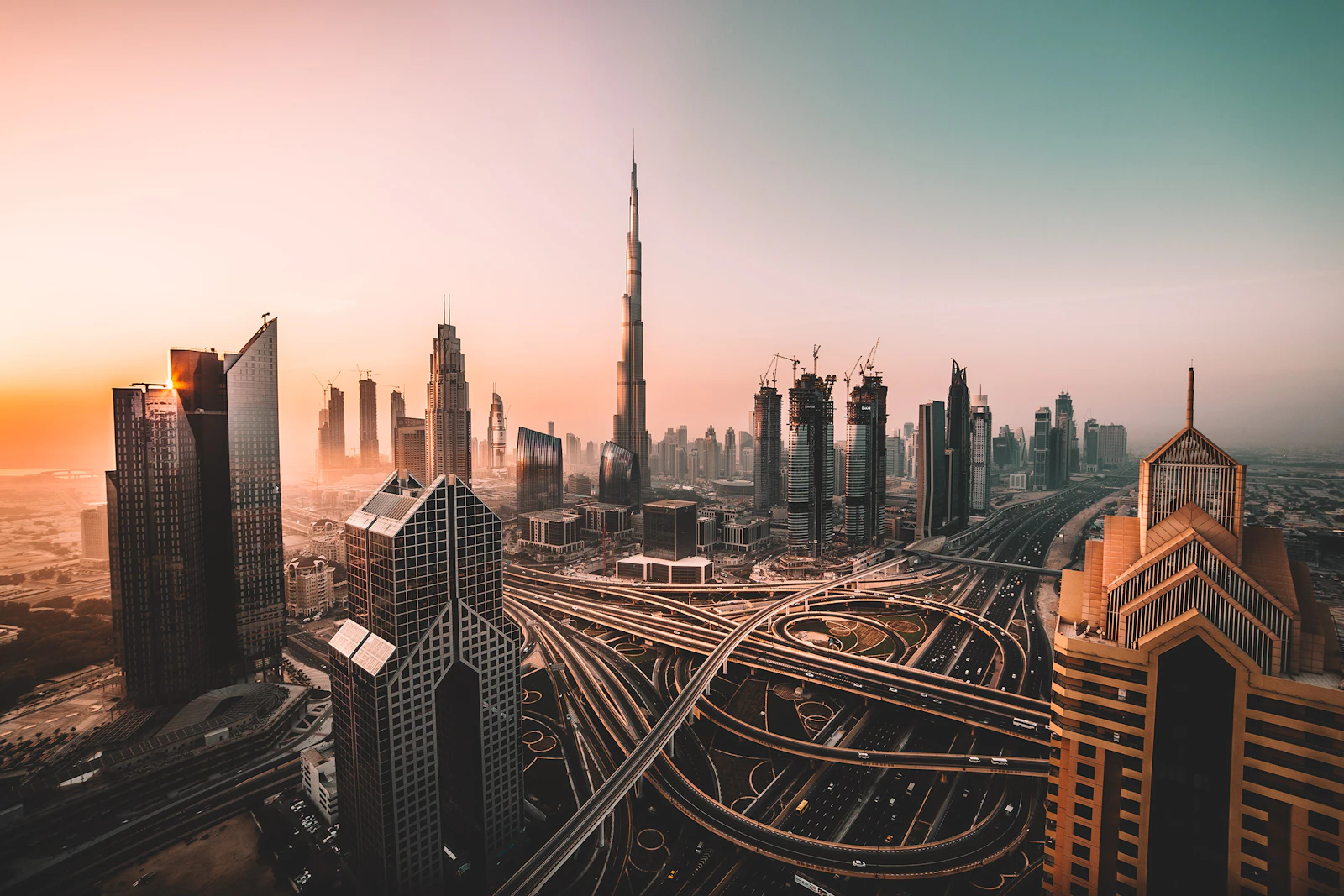
Written by Chak (Chakravarthy Natarajan Santhakumar) - Last updated: November 2026. The evolution of Dubai through the lens of the 2040 Urban Master Plan represents a structural pivot from sprawling suburban expansion to intensified, transit-oriented multi-center urban nodes. At Chakwise, our institutional advisory framework dictates that capital allocation must track infrastructure velocity rather than superficial sentiment, recognizing that secondary resale appreciation in established urban centers is fundamentally driven by the compression of developable land within designated polycentric hubs. As the emirate targets a population threshold approaching six million residents over the next decade and a half, the structural demand profile for secondary assets within the historical and emerging urban centers undergoes a profound transformation, separating speculative off-plan constructs from enduring, cash-generating secondary stock that commands sustained liquidity during market corrections.Sovereign corridors defined within the 2040 blueprint such as the Downtown-Business Bay axis, the Dubai Marina-JBR coastal corridor, and the emerging Expo City and Silicon Oasis hubs are witnessing a deliberate reallocation of public capital aimed at enhancing multimodal transport connectivity, green transit-oriented spaces, and mixed-use commercial densities. This deliberate policy intervention alters the supply-demand equilibrium in mature secondary markets, where new supply is inherently constrained by existing architectural density. Consequently, secondary assets in these urban centers possess an asymmetric valuation advantage over remote greenfield developments, as they offer immediate operational occupancy, verified infrastructure maturity, and established community ecosystems that cannot be replicated overnight by master developers launching peripheral master plans.Valuation framing within these secondary urban centers requires a sophisticated dismantling of traditional capital appreciation metrics, moving beyond nominal price-per-square-foot comparisons to evaluate net yield sustainability, replacement cost dynamics, and the compounding velocity of transit-adjacent foot traffic. When family offices and institutional allocators deploy capital into secondary resale units, they are underwriting the longevity of the urban node itself. The Dubai 2040 framework explicitly protects and enhances these core nodes by restricting low-density sprawl and channeling municipal investment into upgrading existing infrastructure, thereby safeguarding the long-term capital value of mature apartments and townhouses against obsolescence risks.Furthermore, the interplay between macroeconomic liquidity inflows into the United Arab Emirates and the structural tightening of prime urban inventory creates a unique valuation cushion for secondary assets. Unlike primary off-plan properties that bear construction, execution, and delivery delays, secondary properties in key urban centers offer immediate integration into the rental yield pool, providing an effective hedge against inflationary cost pressures on construction materials and labor. Through our rigorous advisory lens, we counsel our private wealth clients to view secondary resale appreciation not as a function of speculative frenzy, but as a mathematical certainty derived from the convergence of fixed land supply, mounting population densities, and sovereign-backed urban intensification strategies.

Etihad Rail Freight Impact on Northern Emirates Industrial Yields
Infrastructure & Growth Corridors

Etihad Rail Freight Impact on Northern Emirates Industrial Yields

Written by Chak (Chakravarthy Natarajan Santhakumar) - Last updated: November 2026. The transformation of the United Arab Emirates logistics landscape through the operationalization of the national rail network marks a structural inflection point for industrial real estate asset valuation across the Northern Emirates. For decades, the valuation matrix governing warehousing, light manufacturing, and distribution assets in Sharjah, Ajman, Umm Al Quwain, and Ras Al Khaimah relied heavily on road freight accessibility, primary highway proximity, and proximity to domestic urban centers. The integration of a heavy freight railway network alters this paradigm permanently, shifting the locus of industrial asset attractiveness toward rail terminal nodes, dry ports, and intermodal connectivity points.Sovereign infrastructure corridors such as the Etihad Rail network are not merely transit upgrades. They function as macroeconomic redistributors of industrial capital, reshaping spatial economics by compressing transit times between deep-water ports, heavy industrial zones, and the broader GCC consumer base. As freight moves off highways and onto tracks, secondary and tertiary industrial clusters in the Northern Emirates experience a fundamental re-rating of their underlying land values. Assets that were previously discounted due to peripheral locations are now re-evaluated through the lens of multimodal efficiency, unlocking unprecedented operational synergies for tenants and compressed capitalization rates for institutional owners.At CHAKWISE, our advisory engagements with merchant families and sovereign capital allocators require a granular, bottom-up underwriting approach to assess how macro infrastructure investments translate into micro-level net operating income. The deployment of the national railway introduces a complex matrix of winners and losers within the Northern Emirates industrial real estate ecosystem. Facilities lacking direct or proximate access to freight terminals face structural obsolescence as tenant demand concentrates around rail-served logistics parks. Conversely, modern warehouses situated within designated economic corridors are commanding premium rents, redefining yield expectations and challenging historical cap rate spreads between Dubai and its northern neighbors.Understanding the true financial impact of this infrastructure shift demands an exhaustive examination of supply chain economics, municipal zoning policies, and capital market dynamics. As logistics operators transition their supply chains to leverage rail economics, property yields are responding to changes in tenant stickiness, lease structures, and capital expenditure requirements. This dossier provides a comprehensive institutional assessment of how Etihad Rail reshapes industrial real estate yields across the Northern Emirates, offering actionable intelligence for sophisticated investors seeking to navigate this generational asset re-pricing cycle with precision and strategic foresight.

Commercial Yards and Logistics Land Beyond Core
Infrastructure & Growth Corridors

Commercial Yards and Logistics Land Beyond Core

Written by Chak (Chakravarthy Natarajan Santhakumar), Senior Investment Advisor. Institutional capital allocation often gravitates toward high-profile office towers and prime residential waterfronts. Yet, family offices with generational merchant roots quietly look at industrial fundamentals, specifically commercial yards, light industrial plots, and open storage infrastructure positioned along emerging logistics corridors. As supply chain resilience, e-commerce fulfillment, and regional manufacturing take center stage under national economic agendas, open commercial yard space has transitioned from secondary real estate into a scarce operational asset. The friction between urban expansion and industrial zoning creates structural supply constraints that passive investors frequently overlook. [image: https://images.unsplash.com/photo-1546412414-e1885259563a?auto=format&fit=crop&w=1200&q=80 | center | Market Context Caption] According to recent logistics research from Savills and Cavendish Maxwell, prime industrial occupancy across Dubai has remained tight, driven by sustained demand from transport, manufacturing, and distribution operators. When urban centers expand, older industrial districts face rezoning pressure, pushing yard-dependent operations further into integrated outer logistics rings.

Roudah Expo City Realities
Infrastructure & Growth Corridors

Roudah Expo City Realities

Urban expansion corridors demand a quiet look at timing and infrastructural maturation. When capital moves toward newly forming hubs like Roudah near Expo City, the primary question is not just how fast concrete rises, but how deeply the micro-economy roots itself before yields normalize. [image: https://images.unsplash.com/photo-1546412414-e1885259563a?auto=format&fit=crop&w=1200&q=80 | center | Market Context Caption] Wisdom-Driven. Beyond Transaction.